
-
Psychological Helppsychologiczna-pomoc.plonline psychological help without leaving home
Online psychologist – professional help
In recent years, online psychological counseling has become one of the most popular forms of psychological support. More and more people are choosing to speak with a specialist online because it's convenient, discreet, and accessible regardless of their location.
Online psychologists offer professional support in many areas of life—from stress and emotional difficulties, through relationship problems, to more serious mental crises. Thanks to technology, you can access specialist help without having to travel to a clinic.
For many people, an online consultation is the first step to taking care of their mental health.

Quick help from a psychologist
That psychologiczna-pomoc.pl you can use support from anywhere in Poland (and abroad)We work with children, adolescents, adults, seniors, couples, and families—always with respect for your situation and at a pace you can manage.
Don't know where to start? Briefly describe your situation and we will suggest the best support path.
Ask a question
What is an online psychologist?
An online psychologist is a specialist who provides psychological support via the Internet – most often in the form of a video call, telephone or chat.
In terms of content, a consultation is very similar to an in-office visit. The only difference is that the meeting takes place remotely.
The most common forms of online consultations
- video call
- call
- psychological chat
- instant messaging therapy
The most popular is a video call because it allows you to maintain natural contact with the psychologist.
A standard session lasts approximately 50 minutes.
Online psychological help – when is it worth using?
Many people wonder when is the right time to talk to a psychologist.
In reality, there's no need to wait for a serious crisis. Psychological help provides support in many everyday difficulties.
The most common reasons for a psychological consultation
- chronic stress
- relationship problems
- emotional difficulties
- relationship crisis
- burnout
- depression
- bow
- low self-esteem
- difficulties at work
- life crisis
A psychologist helps, first of all, to understand the situation and find solutions.
1) Selection of specialist and date
You choose the area of help (e.g., anxiety, depression, relationships, child, couple). If you're unsure, you can start with a general consultation, where we'll work together to determine the direction of your work.
Would you like us to help you choose a specialist for your problem?
2) First conversation: goals, initial diagnosis, plan
The first meeting is usually:
- naming the difficulties and context (what is happening, when, how it affects life),
- goal definition: relief, stabilization, decision, change of patterns, support in crisis,
- proposed plan: number of meetings, rhythm, working methods, possible recommendations.
This isn't a "grade" or a "test." It's a professional conversation where you feel understood and can guide you.
3) Further meetings and progress
In subsequent sessions, we work on what matters most to you: emotional regulation, thoughts, relationships, boundaries, trauma, behaviors, and habits. Results often appear in stages: first, a calmer nervous system, then greater clarity, and finally, concrete changes in daily life.
If you feel like "this is the moment" — schedule a consultation online.
Who is the online psychologist for?
Children and parents
Support for a child usually begins with a conversation with the parent/guardian about what concerns they have, what their home and school situation is like, and what the symptoms are. Then we determine whether working with the child, the parent, or a combined approach would be best.
Youth and students
Young people often come to us with concerns about pressure, anxiety, relationships, identity crises, overload, and loneliness. It's easier to get started online—less stress, faster, and in a familiar environment.
Adults (stress, depression, anxiety)
Online is helpful when you're short on time, low on energy, or live in a smaller town. It's also a good solution for shift workers and corporate employees.
Seniors
Support for loneliness, grief, health anxiety, and life changes. Online can be convenient if commuting is difficult—and conversation can be just as valuable.
Couples and marriages
Online couples therapy helps with conflict, distance, trust issues, and communication problems. Many couples find it easier to manage logistics and meet regularly.

What problems do we help with most often?
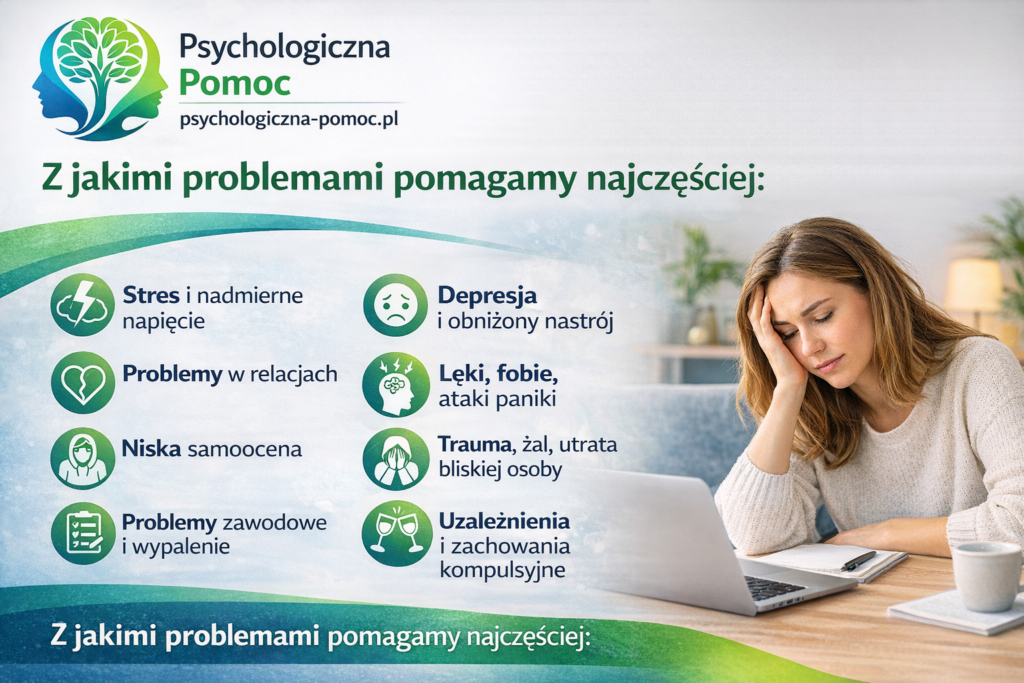
Depression and low mood
Depression isn't "weakness." It's a state of overload in the brain and body. Our work focuses on stabilization, regaining energy, meaning, and influence—one step at a time.
Anxiety disorders and panic attacks
Anxiety often "pretends to be a threat" even when you are actually safe. We teach you to understand the mechanism of anxiety, work with body symptoms and the thoughts that fuel it.
Burnout and stress at work
If you constantly "have to," and rest isn't working, that's a wake-up call. We're working on boundaries, regeneration, changing habits, and regaining meaning and agency.
Eating disorders
Safety is key here: delicate work with control, shame, the body, emotions, and the relationship with food. We often recommend interdisciplinary collaboration.
Addictions
Addictions aren't a matter of "willpower," but rather a mechanism for regulating stress. We help you find alternative coping mechanisms, defuse triggers, and develop a plan for change.
Mourning and loss
After a loss, everything can look different. In therapy, we provide space for the pain, sorting through emotions, and slowly regaining ground.
Violence and difficult relationships
If you're experiencing violence, control, blackmail, or harassment, safety and a plan are paramount. We provide psychological support and help you identify the situation and possible steps to take.
Is an online psychologist effective?
Online consultations work very well for many challenges—especially when meetings are held regularly and you have the opportunity to talk calmly. The key factors are the specialist's match and the quality of the relationship.
Who is the best person to use an online psychologist?
- people who are busy or live outside large cities,
- people in a low mood who find it difficult to "go out in public",
- parents, students, emigrants,
- people who want to start quickly and without additional stress.
When is it better to choose inpatient/urgent care?
If you are in a life-threatening situation or have suicidal thoughts and plans, you need urgent emergency help (112 / nearest emergency room / 24/7 crisis support). Online therapy can be part of the process, but in such a situation, immediate protection is crucial.
Unsure if online is right for you? Briefly describe your situation—we'll suggest the best form of support.
Confidentiality, security and comfort of conversation
In many difficulties, online consultations work very well
You have the right to privacy. To ensure a comfortable conversation, it's important to ensure the right conditions are in place: a quiet place, headphones, and muted notifications.
Mini-checklist before the consultation
✅ 50 minutes of peace
✅ headphones
✅ stable internet
✅ note: 3 things I come with
✅ one question I want to ask
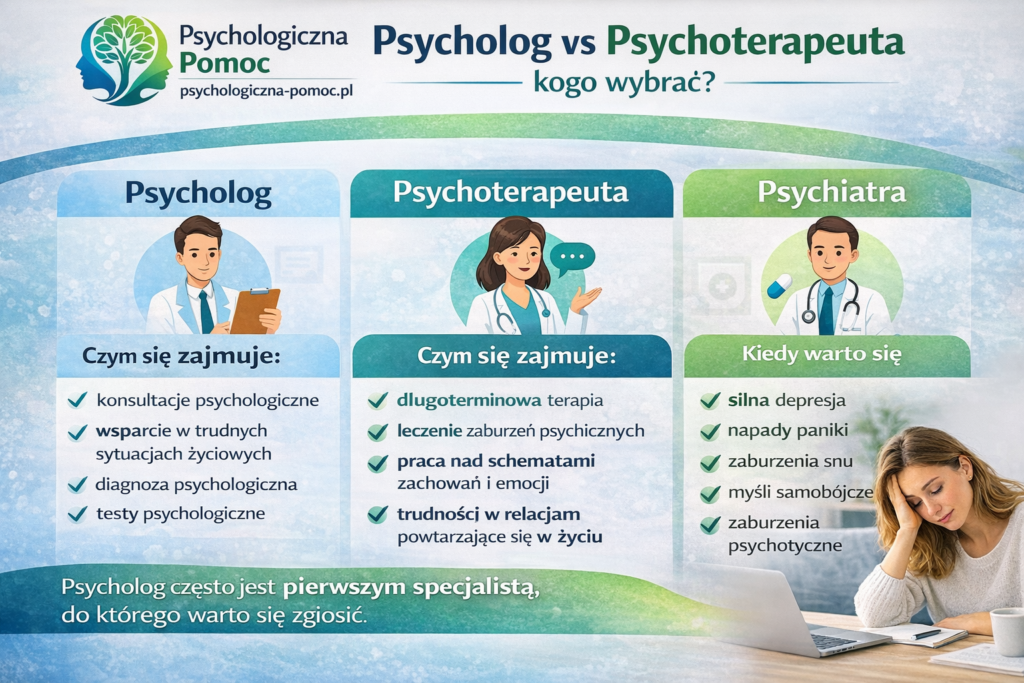
Psychologist vs psychotherapist vs psychiatrist – who to choose?
| Who? | What does it help with most often? | What does it offer? | When to choose |
|---|---|---|---|
| Psychologist | crises, stress, anxiety, depression, relationships, support | consultations, initial diagnosis, assistance plan | when you want to start a conversation and sort out the situation |
| Psychotherapist | persistent difficulties, patterns, trauma, process work | mainstream therapy, regular process | when you want deeper, long-term work |
| Psychiatrist | symptoms requiring medical evaluation | medical diagnosis, medications | when symptoms are severe and long-lasting, they make it difficult to function |
How to choose a good psychologist?
How to choose a good psychologist online (short criteria)
- Experience with your problem (e.g. anxiety, depression, couples, children).
- Work style (concrete, warmth, structure).
- Clear rules of cooperation and confidentiality.
- Feeling safe after 1-2 meetings.
- Plan: After your first visit, do you know what to do next?
Schedule a consultation - the fastest way
- Please describe what you are coming for and who you need help for.
- We will select a path and propose a date.
- We meet online and make a plan.
FAQ - Frequently asked questions
What does the first visit to an online psychologist look like?
The initial consultation is a calm conversation about what's going on and what you need. The psychologist will ask about your symptoms, context, and goals, and then propose a plan for further work (e.g., further meetings, support techniques, or a consultation with another specialist).
How long does an online psychological consultation take?
Typically, a meeting lasts around 50 minutes. This standard time allows for a leisurely discussion of the issue, gathering key information, and determining next steps. The exact duration may depend on the type of consultation (individual, couple, parent-child).
How much does an online psychologist cost?
The price depends on the specialist, the type of consultation, and the duration of the meeting. It's crucial to be clear about the price list before scheduling an appointment. If you prefer, we can suggest the optimal path: an initial consultation, crisis intervention, or a therapeutic process.
Is online therapy effective?
Yes—for many people, online therapy is just as effective as in-person sessions, especially when meetings are regular and you have the opportunity to talk privately. The key factors are: matching a specialist, your sense of security, and consistency in your work between sessions.
How quickly can I make an appointment with a psychologist online?
Availability depends on the specialists' schedules, but appointments are often available within a few days, including evenings. If you need support immediately, please describe your situation and we will recommend the fastest option. In urgent situations, safety is paramount.
Is an online conversation with a psychologist confidential?
Yes. Professional confidentiality applies, and the consultation should take place via a secure communication channel. It's also important to ensure your privacy: headphones, a quiet space, and muted notifications. This allows you to speak freely and without fear.
What to prepare for an online consultation?
All you need is 50 minutes of peace, headphones, and stable internet. A brief note can be helpful: what's happening, when, how it's impacting your life, and what you expect from the meeting. If you have a treatment or diagnosis history, you can have it handy—but it's not required.
Psychologist or psychiatrist – who to choose?
A psychologist helps understand the situation, emotions, and mechanisms, and develop a support plan. A psychiatrist assesses the patient's health from a medical perspective and may initiate pharmacological treatment. When symptoms are severe, collaboration between both specialists is often best.
Does an online psychologist help with depression and anxiety?
Yes. For depression and anxiety disorders, online psychological support can support stabilization, improve functioning, and change thinking and reaction patterns. For severe symptoms, it's worth considering a psychiatric consultation to ensure comprehensive support.
Is an online psychologist for children and teenagers?
Yes, but the format depends on the age and situation. We usually begin with a conversation with the parent/guardian, and then determine the best plan: meetings with the child, parental consultations, or a combined approach. The young person's safety and trust are key.